Home Think — Perception & Sensor Fusion Decide — On-Device Autonomy Act — Operator Control Strategic Consulting Symage Platform Defense, Aerospace & Space Industry 4.0 Medical Technology AgTech Proof Blog Solving For Tomorrow Podcast Company Careers News Speaker FAQ Talk to the Team →
Capability: Think

Think: Perception, sensor fusion, and edge inference.

Computer vision, sensor fusion, and GPU-accelerated inference engineered to run on the device. Built for robots and unmanned systems that have to see and understand the real world in milliseconds, not seconds.

The first thing the system has to get right.

Before a robot can decide anything, it has to know what’s around it. Cameras, LiDAR, radar, IMU, every input arrives noisy, late, or wrong in some way. Our job is turning that mess into something a controller can act on, on the device, before the platform has already moved past the moment. The stacks we ship run on NVIDIA Jetson, embedded Linux, and ROS 2. Most of the latency tuning happens in CUDA.

Perception and sensor fusion at the input layer, getting a clean, useful picture out of the sensors. GPU and edge inference at the runtime layer, making sure that picture arrives on time, on the hardware the platform actually has. We’ve shipped both into production for NASA, Teledyne FLIR, and the operator running more autonomous mobile robots than anyone else, plus a long bench of robotics manufacturers and connected-device companies whose names won’t mean anything until their products do.

None of these systems get to fail quietly. A perception bug isn’t a Jira ticket; it’s a mission scrubbed, a target lost, a platform out a window or off a shelf. That changes what’s worth testing, what’s worth arguing about in review, and what isn’t ready yet.

Perception and sensor fusion.

Sensor fusion engineering is the discipline of combining multiple imperfect inputs, a camera blinded by sun glare, a LiDAR that struggles in rain, an IMU that drifts, into a single representation the system can trust. We build computer vision pipelines, multi-sensor fusion stacks, and SLAM systems for robots and unmanned platforms. The toolchain is usually OpenCV, ROS 2, custom calibration rigs, and proprietary fusion algorithms when the off-the-shelf stack isn’t good enough.

What this work covers:

We’ve shipped perception software for robotics across NASA’s CADRE multi-rover lunar program, Teledyne FLIR’s computer vision platforms for unmanned defense systems, and connected medical devices that have to read environmental cues and respond. Computer vision robotics work spans classical vision, deep learning-based detection and segmentation, and the fusion logic that combines vision with non-vision sensors when one stream isn’t enough on its own.

The work that’s hardest is rarely the algorithmic core, it’s the integration. Getting a perception stack to behave correctly on the actual platform, in the actual environment, with the actual sensors mounted in the actual configuration, is where most perception projects either succeed or stall. We’ve built that integration discipline across enough programs to make it the part of the engagement we de-risk first.

GPU acceleration and edge inference.

GPU acceleration on robotics platforms is what makes real-time edge inference software possible. We write CUDA kernels, optimize TensorRT inference graphs, and profile end-to-end latency from sensor input to actionable output. Edge inference lives or dies on milliseconds; offloading to the cloud is rarely an option for autonomous systems that have to keep working when the network drops.

What this work covers:

GPU acceleration robotics work is one of the most common reasons robotics manufacturers bring us in. The model runs fine on a workstation. It won’t fit the latency or thermal budget on the device. The difference between a perception system that ships and one that doesn’t often comes down to a few milliseconds of latency, a few watts of power, and the engineering judgment to know which optimizations actually matter.

Perception, deployed.

NASA CADRE, Autonomous lunar rover swarm
// 01
// Aerospace · Lunar Exploration
NASA · CADRE

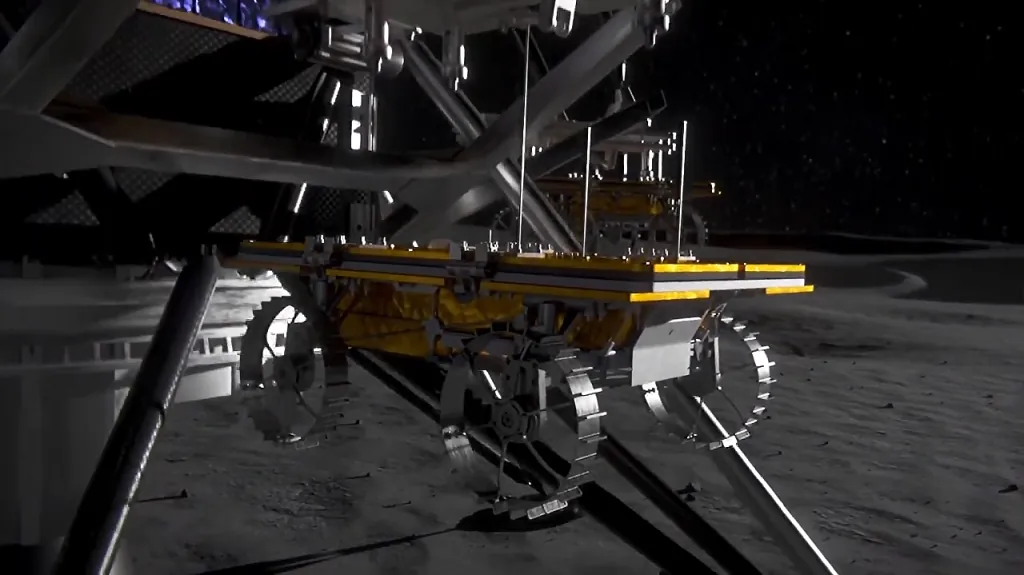
Three autonomous rovers exploring the Moon without a human in the loop.

Hover for the numbers →
// NASA · CADRE

Cooperative autonomy, engineered for the lunar surface.

Geisel developed the deployment software that lowers three autonomous rovers from their lander, plus the ground-control interface for the ground-penetrating radar aboard each rover.

3Autonomous rovers
237°FMidday lunar temp
33 ftGPR subsurface reach
Read the case study →
Teledyne FLIR Kobra UGV
// 02
// Defense Robotics
Teledyne FLIR · Bomb-Disposal UGV

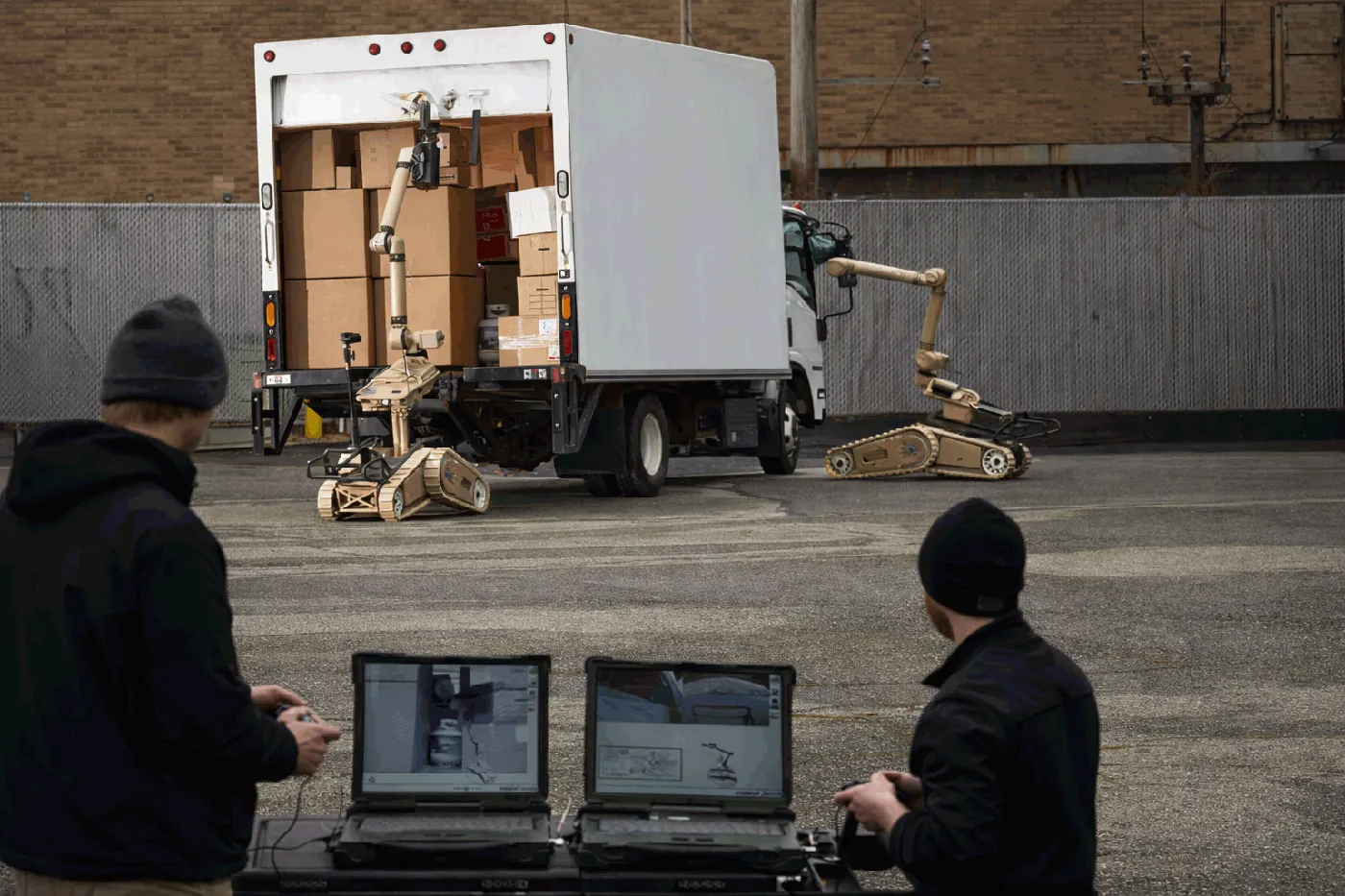
One controller. An entire UGV fleet. Shipped in six months.

Hover for the numbers →
// Teledyne FLIR

The safety-critical operator interface that made universal control possible.

A tablet-based universal controller letting a single operator direct multiple UGVs and unmanned aircraft, delivered inside an Army deadline that couldn’t move.

6 moMission-critical delivery
1Operator, full fleet
UGV+UAVUniversal controller
Read the case study →
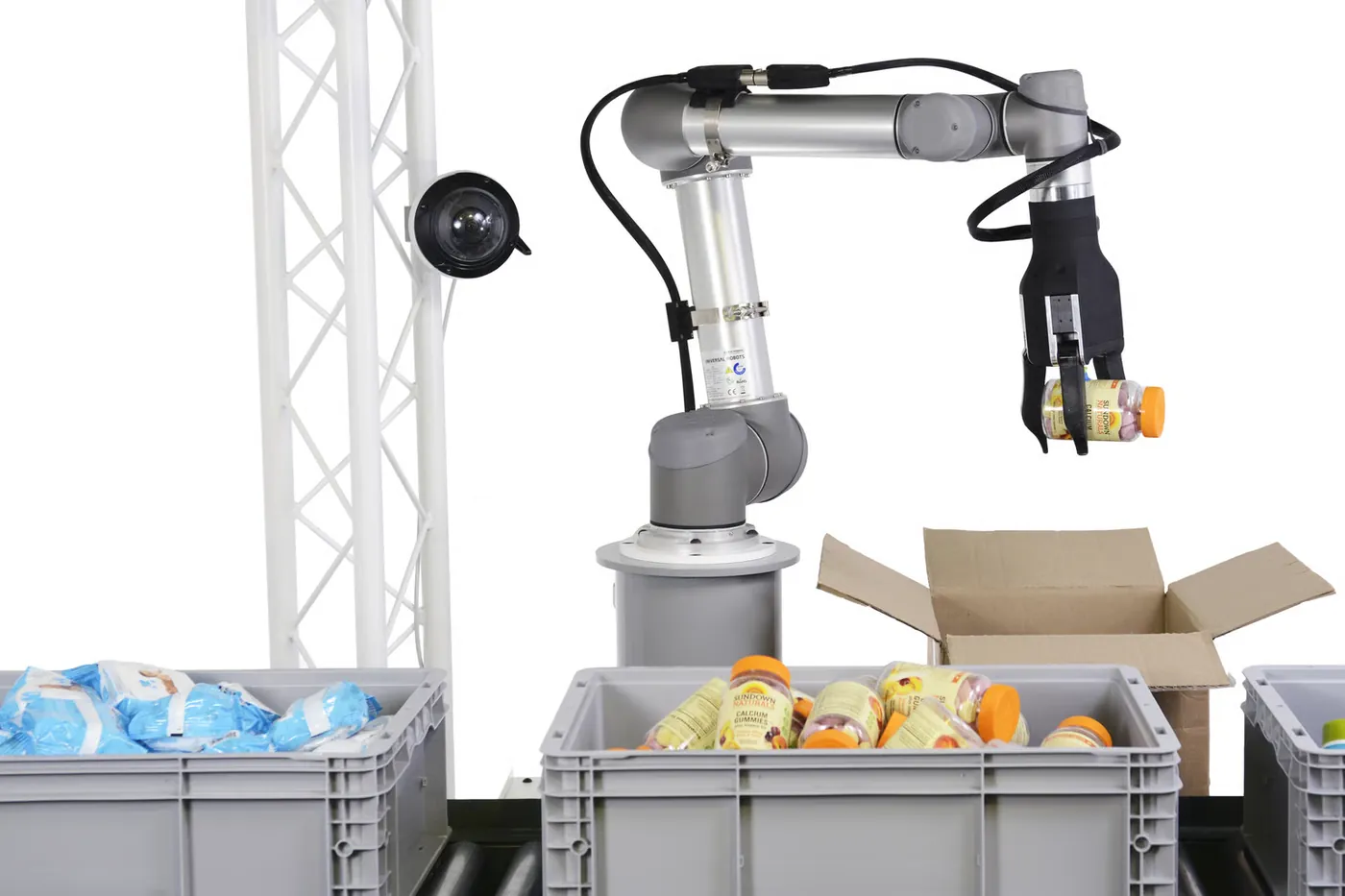
Warehouse robotic arm perception system
// 03
// Warehouse Autonomy
World’s largest operator of mobile robotics

Eight cameras. RGB and LiDAR. A robot that understands what it’s moving.

Hover for the numbers →
// Warehouse Robotics · Perception

Detection is easy. Understanding is the hard part.

Multi-camera sensor network fusing RGB and LiDAR for real-time object detection, identification, and packing decisions at fulfillment-center scale.

8Cameras integrated
RGB+LiDARSensor fusion
GPUCUDA-accelerated
Read the case study →
// Adjacent · Synthetic Data

Need training data your perception model can actually use?

Production perception models are only as good as the data they were trained on. When real data is too rare, too expensive, or too sensitive to collect at training scale, Symage, the synthetic data platform built by the Geisel team, generates physics-based synthetic data for computer vision: image, document, and tabular. Same engineering discipline applied upstream of the model, so the perception stack you deploy isn’t fighting a sim-to-real gap from day one.

Explore Symage →

Questions about the work.

Does Geisel offer CUDA development services?
Yes. CUDA development services are a core part of the Think capability, custom kernel work, TensorRT optimization, GPU acceleration on NVIDIA Jetson, and the integration glue that lets perception models run inside ROS 2-based systems at production latency.
Does Geisel build perception on NVIDIA Jetson?
Yes. Jetson Orin, Xavier, and Nano are the deployment targets we work on most often. Most engagements include some combination of model optimization, custom kernel work, and end-to-end latency profiling on Jetson.
Does Geisel work outside ROS 2?
Yes. ROS 2 is the most common framework for the perception work we ship, but we work in non-ROS architectures when the platform calls for it, proprietary middleware, embedded RTOS environments, and custom integration on bespoke hardware.
Can Geisel ship perception software under IEC 62304 for medical devices?
Yes. Connected medical device perception work runs through the same IEC 62304 software lifecycle discipline as any other medical device software we build, design controls, hazard analysis, software requirements traceability, and the verification and validation evidence appropriate to the device’s risk classification.
Does Geisel use synthetic data to train perception models?
When the customer’s data is too rare or too expensive to collect at training scale, yes. Symage, the synthetic data platform built by the Geisel team, generates physics-based synthetic data for exactly this kind of work. See Symage for details.

Building perception, autonomy, or operator control?
Let’s talk about what it takes to ship it.

Talk to the Team →