Does Geisel build operator control on tablets?
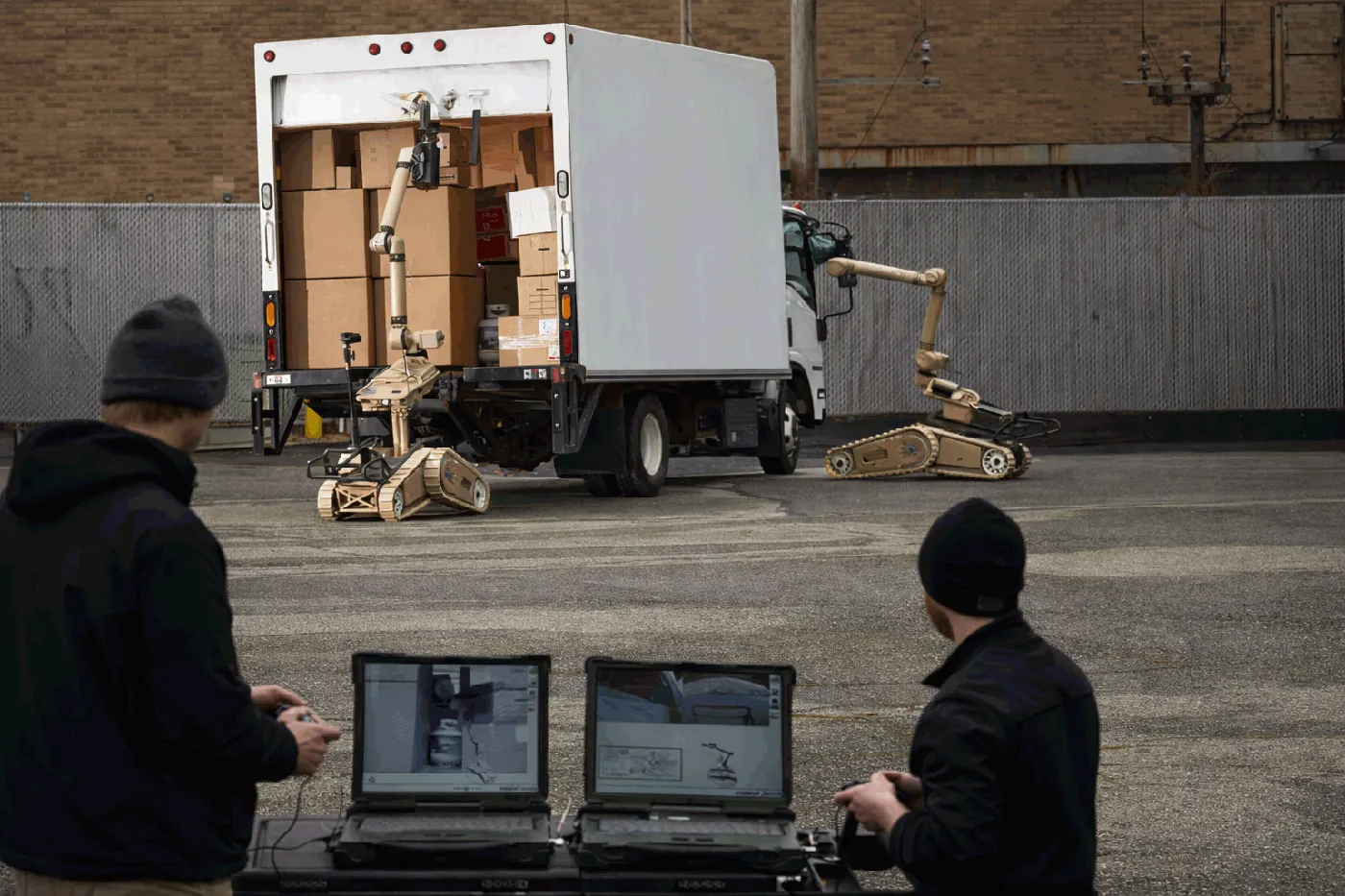
Yes. Tablet-based operator control is one of our most common form factors, including the universal controller we built for Teledyne FLIR’s bomb-disposal UGV program, where one operator directs a multi-platform UGV and UAV fleet from a single device. We also build console- and laptop-based operator stations and embedded touch HMI when the platform calls for it.
Does Geisel do BVLOS-compliant drone ground control?
Yes. We’ve shipped BVLOS-compliant ground control for SafeOps Systems’ SOS Live platform, which puts autonomous UAVs over fire and incident scenes ahead of first responders. BVLOS compliance is engineering work, not a checkbox, it’s built into the safety case from the architecture down.
Can Geisel ship operator HMI under IEC 62304 for medical devices?
Yes. Safety-critical HMI for medical devices runs through the same IEC 62304 software lifecycle discipline as any other medical device software we ship, design controls, hazard analysis, software requirements traceability, and the verification and validation evidence appropriate to the device’s risk classification. We’ve built diagnostic-device interfaces under that framework.
What’s the difference between teleoperation and supervised autonomy?
Teleoperation puts the human in the control loop, the operator drives the platform directly, with the system relaying state and accepting commands. Supervised autonomy puts the human on the loop, the platform decides for itself, and the operator monitors, redirects, or intervenes when needed. Most modern operator control we build is somewhere on the spectrum between the two, with the level of autonomy adjustable based on the situation.
Does Geisel build the embedded execution layer too?
Yes. The operator UI is one half of Act; the on-device execution layer underneath it is the other. We build the real-time control loops, the embedded firmware, motor and actuator control, and the sensor-driven safety interlocks, on RTOS targets including QNX and Zephyr, on real-time Linux, and on bare-metal where the platform calls for it.
Does Geisel work outside ROS 2?
Yes. ROS 2 is common in the autonomy and control work we ship, but we work in non-ROS architectures whenever the platform calls for it, proprietary middleware, RTOS environments, custom comms, and bespoke embedded execution stacks built for specific deployment constraints.