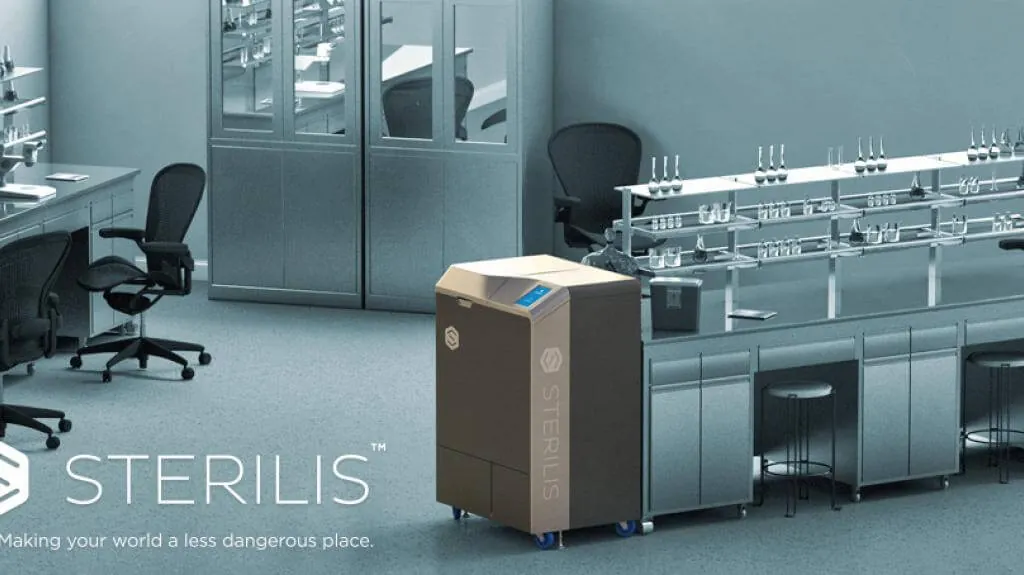
// 01, The Device
A regulated, hazardous problem solved at the point of generation.
Medical waste is a regulated, hazardous problem. Sterilis Solutions built a device that solves it at the point of generation, converting medical waste into solid, sterile trash on-site, without the handling risks and logistical cost of traditional disposal.
The device worked. Getting it to production required something the Sterilis team didn’t have in-house: the IoT and security expertise to make a connected medical device secure, reliable, and ready for customers.
// 02, The Challenge
A prototype that works in the lab has to work in the field, connected, secured, and monitored.
Sterilis had a strong prototype. The gap between a prototype and a production-ready connected device is where most hardware companies underestimate the work involved. Security has to be designed in, not bolted on. Device-cloud communication has to be reliable enough that a failure in the field doesn’t mean a device operating without oversight. The architecture has to be built to hold up under real-world conditions, not just controlled ones.
Sterilis needed a partner who had done this before.
// 03, What Geisel Built
Audit, cloud platform, device comms, and architecture, as one system.
Security Audit and Production-Ready Cloud Platform
Geisel started with a security audit, identifying vulnerabilities before they became production problems. From there, the team built a secure cloud platform that protected both the device and the web portal, and gave Sterilis’s sales and internal teams easy, reliable access to customer accounts.
Security in a connected medical device context isn’t optional. A device that processes medical waste and communicates patient or operational data to the cloud has to be hardened against the threats that come with being connected. Geisel brought the experience to know where those threats live and how to close them.
Device-Side Communications
Reliable communication between the device and the cloud is what makes a connected device useful. If that link is unreliable, the system loses visibility into what’s happening in the field. In a medical waste processing context, loss of visibility is a compliance and operational risk.
Geisel handled the device-side communications alongside the cloud platform, owning the full communication layer from device to cloud rather than splitting responsibility across teams.
Connected Device Architecture Redesign
Beyond the immediate deliverables, Geisel worked with Sterilis to rethink the architecture of the connected device itself. The result was more reliable and efficient communication with the cloud, leading to better performance, greater stability, and more predictable behavior in real-world conditions.
That kind of work doesn’t show up as a feature. You see it in how the device behaves when things aren’t perfect, when conditions are messy or unpredictable. And that’s exactly when a medical waste processing system needs to keep running.
// 04, The Result
From strong prototype to secure, production-ready device.
Sterilis Solutions went from a strong prototype to a secure, production-ready connected device. The cloud platform, device communications, and architecture redesign worked together as a system, not as separate deliverables stitched together after the fact.
A device that converts medical waste into sterile trash is only as useful as the confidence operators and regulators have in the system monitoring it. That confidence starts with the security and reliability of the software underneath.
Reliable communications between the machine and the cloud are vital to the system as a whole, and it made sense for Geisel Software to also handle the device side of those communications. Geisel Software had the experience and knowledge to jump in and contribute to the device software.
Jeanne Petrangelo · Sterilis Solutions