// 01, The Robot
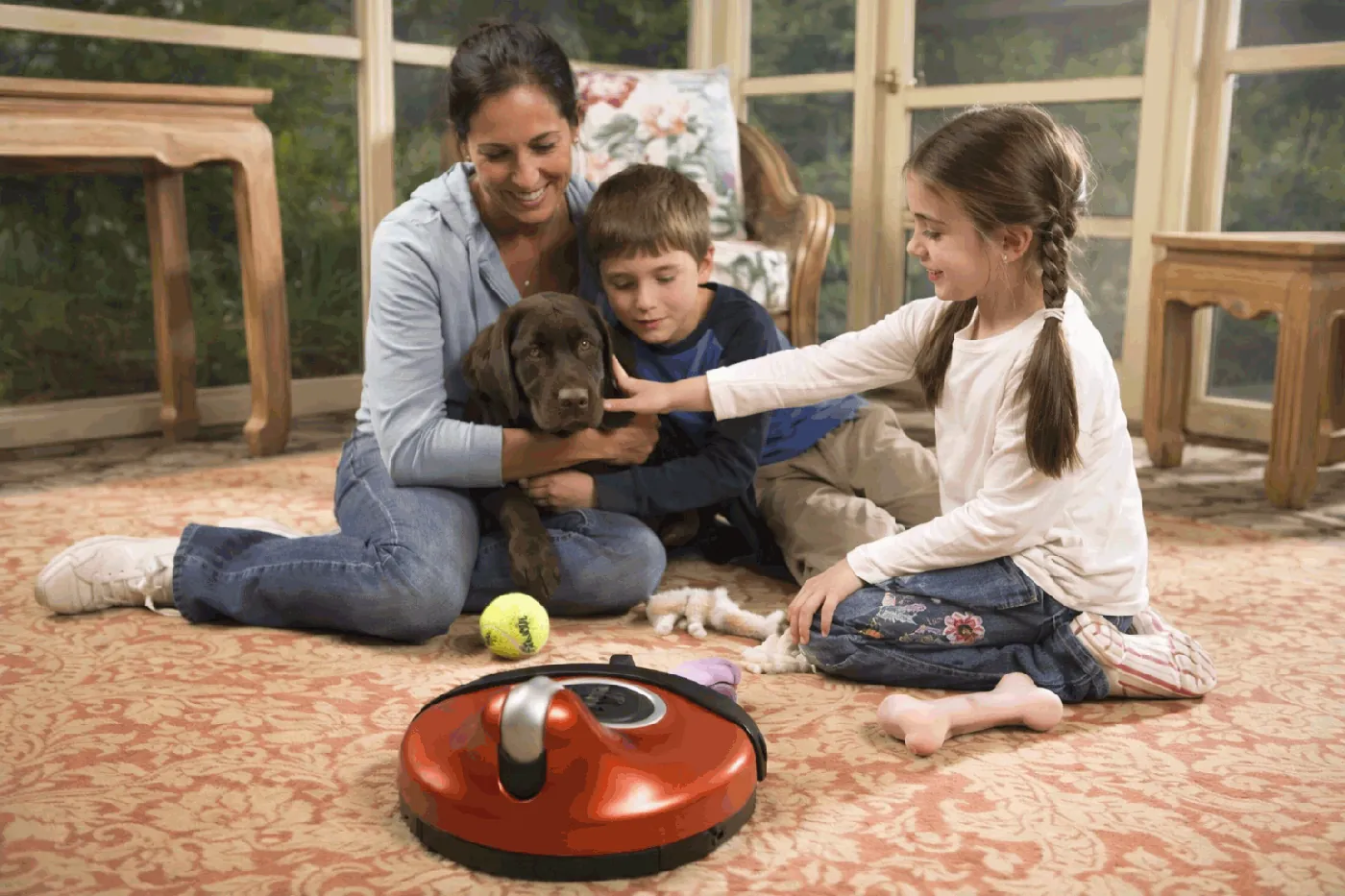
iRobot’s first attempt at a telepresence robot, built on the Roomba chassis.
iRobot’s ConnectR was their first attempt at a telepresence robot, built on the proven Roomba chassis, equipped with two high-resolution cameras, two-way audio, and remote control capability. The vision was straightforward: let people connect to home from anywhere.
Getting there meant manufacturing a highly technical connected device at volume, consistently, to a standard that iRobot’s customers would trust.
// 02, The Challenge
You can only ship a connected robot if you know it’s connected.
iRobot’s first attempt at manufacturing a telepresence robot at scale surfaced a problem that every hardware company eventually faces: how do you verify that every unit coming off the line actually works, across every component, every connection, every subsystem, before it reaches a customer?
Manual testing doesn’t scale. Inconsistent testing creates inconsistent products. And when a defective unit is returned, you need to know whether the failure happened in the factory or after shipping, because the answer determines whether you have a manufacturing problem or a reliability problem.
iRobot needed a system that could answer all of those questions automatically, for every unit, every time.
// 03, What Geisel Built
Automated built-in test, wired into the production line.
Automated Built-In Test System for Factory-Floor Quality Assurance
Geisel designed and implemented a comprehensive automated testing system built directly into the ConnectR manufacturing process. Every robot coming off the line ran a series of automated tests covering the components that mattered most: wheel operability, video feed functionality, WiFi connectivity, and other critical systems.
The tests were automated, consistent, and exhaustive. Every unit was tested the same way, against the same standards, with no variation introduced by the person running the test.
Pass/Fail Logging and Audit Infrastructure
When a robot completed its test sequence, it transmitted a pass/fail result to a server Geisel deployed on the factory floor. That server tracked performance data for every unit and maintained detailed logs available for audit.
The audit capability turned out to be as valuable as the testing itself. When defective robots were returned, iRobot could determine precisely whether the failure occurred during manufacturing or after the unit shipped. That distinction matters: a manufacturing defect points to a process problem, a post-shipment failure points to a reliability problem. Knowing which one you have determines how you fix it.
Robots that passed were cleared for shipment. Robots that failed were held for inspection and correction before anything left the facility.
// 04, The Result
The testing system outlasted the product it was built for.
iRobot ultimately chose not to commercialize the ConnectR. The testing system Geisel built outlasted the product it was built for. The methodology was so effective that iRobot carried it forward into subsequent programs, including the development and launch of Ava, iRobot’s first autonomous telepresence robot.
The testing protocols and quality assurance architecture designed for ConnectR became the foundation for how iRobot manufactures connected robots. That’s what good manufacturing software engineering looks like: it solves the immediate problem and sets the standard for everything that comes after.
When a connected robot fails in a customer’s home, it erodes trust. The only way to ship with confidence is to know, before it ever leaves the factory, that it will work exactly as expected. That’s what Geisel built for iRobot.
iRobot · ConnectR Manufacturing QA